
Britain's Driving Stress Index 2026
Discover Britain's Driving Stress Index 2026, revealing the UK's most stressful cities to drive in. Explore congestion hotspots, rising parking costs, PCN trends, and expert insights from First Response Finance.
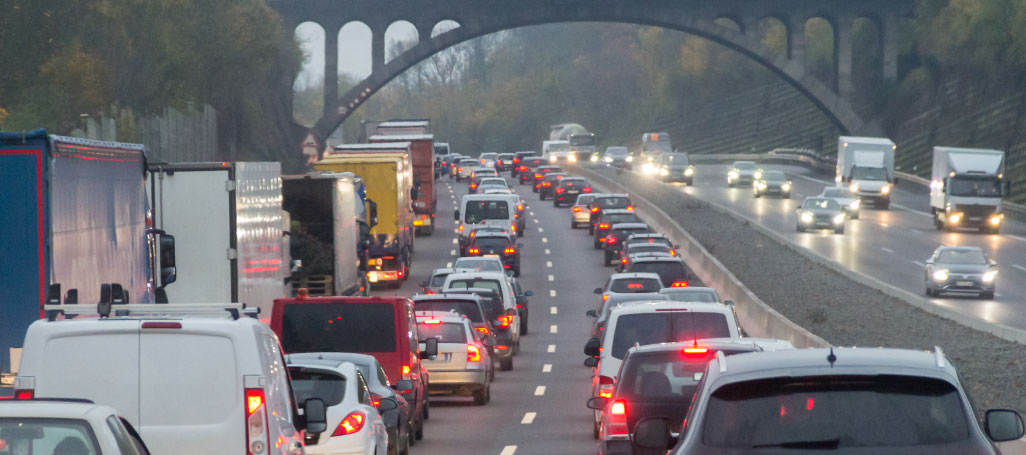
Britain's Driving Stress Index 2026
New data reveals the UK's most stressful cities to drive in
Driving in Britain has never been simple, but new data shows just how dramatically the stresses of commuting are stacking up. Anyone who drives regularly in the UK knows the feeling. The creeping grind of traffic that turns a 20-minute journey into an hour, the sinking moment you spot a yellow envelope tucked under the wiper, or the frustration of watching more of your daily pay disappear every time you park.
Britain's Driving Stress Index 2026, by , brings together three equal factors - congestion, parking cost, and parking fines issued, to pinpoint the UK cities where drivers feel the most stress.
While London still claims the honour of being the UK's most stressful city for drivers, the findings reveal something more surprising: cities traditionally seen as "manageable" are now creeping further up the ranking because local costs, traffic levels, and enforcement pressures are rising simultaneously. Edinburgh and Birmingham now match the capital on parking cost, swallowing 24% of the average worker's daily earnings.
Top 10: Britain's most stressful cities to drive in
| Rank | City | Index score |
| 1 | London | 0.819 |
| 2 | Edinburgh | 0.746 |
| 3 | Birmingham | 0.727 |
| 4 | Manchester | 0.645 |
| 5 | Sheffield | 0.600 |
| 6 | Bristol | 0.548 |
| 7 | Newcastle upon Tyne | 0.502 |
| 8 | Nottingham | 0.478 |
| 9 | Leicester | 0.462 |
| 10 | Belfast | 0.452 |
Cost pain: five most expensive cities where parking eats your pay packet
Nothing says commuting frustration quite like watching a chunk of your daily earnings disappear into a parking meter. The index reveals that in London, Edinburgh and Birmingham, an average worker hands over 24% of a day's wages just to leave their car in a central car park for the day.
- London, Edinburgh, and Birmingham all hit 24% of the average day's pay in that city for an all-day parking stay.
- Sheffield ranks next (17%), then Newcastle (16%).
- Liverpool is the UK's cheapest major city for parking at just 4% of day-rate pay.
| City | All-day cost (£) | Day rate (£) | % of day rate |
| London | 46.40 | 190 | 24% |
| Edinburgh | 38.00 | 157 | 24% |
| Birmingham | 35.00 | 148 | 24% |
| Sheffield | 24.00 | 143 | 17% |
| Newcastle | 23.20 | 141 | 16% |
This hits workers hardest in cities where wages lag behind the capital. For a commuter in Birmingham, for example, a £35 daily parking fee weighs just as heavily as London's £46.40, not because the cost is identical, but because the proportional impact on take-home pay is the same.
Congestion: where drivers lose the most time
Time, not cost, is what some cities take disproportionately from their drivers. If cost impacts your wallet, congestion impacts your energy, patience, and sense of control - three things no one has in great supply at 8:30am.
London is still the worst city for congestion, with commuters losing 148 hours per year which is the equivalent of nearly six full days gridlocked in their cars. Journeys crawl along at around 340 metres per minute, making even short routes feel punishing.
But another story sits beneath London's: Bristol and Manchester form a "time-loss cluster", with commuters there losing 89 and 88 hours a year respectively - more than four full working days spent creeping through bottlenecks. Leicester and Sheffield aren't far behind, with up to 79 and 76 hours lost.
Edinburgh and Birmingham impose 70+ hours of annual traffic delays, revealing that drivers can pay in both money and minutes.
- London sits far ahead, with commuters losing 148 hours per year and crawling through journeys at just 340m per minute.
- Bristol ranks second for time loss (89 hours; 437m/min).
- Manchester follows closely with 88 hours lost.
- Leicester and Sheffield also impose heavy time penalties (76-79 hours).
- Meanwhile, Newcastle stands out as a low-stress city, with just 49 hours lost per year and comparatively swift average travel speeds (600m/min).
- Edinburgh and Birmingham, within the top three of the overall ranking, see commuters lose 72-74 hours a year.
Where drivers are most likely to get a PCN
Penalties add another layer of pressure, especially in cities already dealing with congestion and cost burden.
The index finds:
- London is Britain's fines capital, issuing 1.28 million PCNs in 2024 in the region, which is more than every other city in the study combined.
- Manchester issued 464,880 fines, costing drivers a staggering £14.6m in 2024.
- Liverpool issued 170,935 fines despite being one of the cheapest cities for parking - showing affordability doesn't always equal simplicity.
This metric is crucial because it measures not just financial burden, but enforced stress by the pressure of navigating signage, varying restrictions and limited space.
Understanding Britain's driving stress
Jonathan, motoring expert at leading car finance provider First Response Finance commented on the findings:
"Drivers expect London to be expensive, but what really stands out is how quickly other major cities are catching up. When parking alone can swallow a quarter of the average day's pay, it turns a normal commute into a financial strain. Edinburgh and Birmingham matching the capital on parking costs relative to pay, shows this isn’t a 'London problem' anymore, it's a nationwide shift.
"Time lost to congestion doesn't just affect your schedule - it affects your mood, energy levels, and overall wellbeing. It makes the working day even longer. Spending days or hours a year sitting in traffic adds up. Cities like Bristol and Manchester are now losing almost as much time as London, and that's a clear signal that commuting fatigue is becoming a bigger issue across the UK.
"The number, and value, of parking fines tell an important part of the story. High enforcement levels can make driving feel stressful even before you set off. Manchester, for example, already struggles with congestion, and the sheer volume of PCNs on top of that creates a sense of constant pressure for local drivers. When rules are complicated or spaces are limited, even confident motorists feel on edge.
"What this index highlights is that driving stress isn't created by one factor alone. Some cities punish the wallet, others punish the clock, and a few do both. Understanding these patterns helps drivers make informed decisions, whether that’s choosing when they travel, where they park, or simply knowing what to expect before heading into a city."
Britain's Driving Stress Index 2026 shows that driving strain is no longer a tale of one city towering above the rest. Instead, a new pattern is emerging. London still leads, but:
- Edinburgh and Birmingham are in close pursuit
- Bristol and Manchester mirror London’s time losses
- Cities like Newcastle and Belfast provide glimpses of what lower-stress urban driving could look like
As costs rise and road networks evolve, this data gives drivers a clearer picture of what to expect when commuting into the UK's largest cities.
Methodology
To ensure the index captures stress holistically, each city’s score is an equal average of:
- Congestion: annual hours lost (normalised 0-1)
- Parking cost burden: all-day parking as % of day rate (normalised 0-1)
- Parking fines volume: PCNs issued (normalised 0-1)
If data is missing, the remaining metrics are averaged - ensuring balanced treatment across cities with varying datasets. Salary data is derived from ONS ASHE; congestion data from TomTom and national surveys; parking data from central council-run multistorey car parks to ensure comparability.
Full data sources for parking cost available on request.
FAQs
What is Britain's Driving Stress Index 2026?
Britain's Driving Stress Index 2026 is a data-driven analysis created by First Response Finance that ranks UK cities by how stressful they are for drivers. It combines three equal factors - congestion, parking cost, and parking fine volumes to generate a comparative stress score for major UK cities.
Which city is the most stressful place to drive in the UK?
London is the UK's most stressful city for drivers. Its leading position is driven by extreme congestion, high parking costs, and the highest number of PCNs issued.
Which cities have the highest parking cost burden?
The cities with the highest proportion of daily pay spent on parking are London, Edinburgh, and Birmingham - 24% of daily earnings.
Which UK city has the cheapest all-day parking?
Liverpool is the cheapest major city for all day parking, costing just 4% of a worker's typical daily pay.
Which city has the worst congestion?
London has the worst congestion in the UK, with drivers losing 148 hours per year, almost six full days, sitting in traffic.
Which cities have the highest number of parking fines (PCNs)?
The cities issuing the most PCNs in 2024 were London with 1.28 million fines and Manchester with 464,880 fines.
You may also like...


Jonathan | Sep 2026
Rear-facing vs forward-facing car seats: when should children make the switch?

Jonathan | Sep 2026
Seven everyday driving habits that could land motorists with fines of up to £1,000
Jonathan | Sep 2026
Rear-facing vs forward-facing car seats: when should children make the switch?
Jonathan | Sep 2026